What Actually Makes a Car Fast: Horsepower, Weight, or Traction?
Ask a group of car enthusiasts what makes a car fast, and the first answer is almost always horsepower. Bigger number, faster car. It sounds simple, and sometimes it is. But once you start looking at real performance data, the picture gets more complicated.
Two cars can have the same horsepower and produce completely different results on the track. One might launch hard and run consistent times, while the other struggles to put power to the ground. That difference usually comes down to factors many people overlook.
Speed is not just about power. It is about how effectively that power is used.
Understanding the balance between horsepower, weight, and traction is the key to building a faster car.
Horsepower: The Most Visible Number
Horsepower is the easiest metric to understand and the one most often used to compare vehicles. More horsepower generally means more potential speed, especially at higher speeds where engine output becomes the limiting factor.
But horsepower alone does not guarantee performance.
A car with 600 horsepower that cannot maintain traction may run slower times than a car with 450 horsepower that launches cleanly. That is why professional racers focus on consistency rather than peak power numbers.
Where horsepower matters most:
- High-speed acceleration
- Top-end performance
- Passing power
- Track straightaways
Where it matters less:
- Initial launch
- Low-speed traction
- Driver control
- Consistency
Horsepower sets the ceiling. It does not determine how quickly you reach it.
Weight: The Hidden Performance Multiplier
Reducing weight is one of the most effective ways to improve performance, and it often delivers better results than increasing horsepower. Every pound removed improves acceleration, braking, and handling.
Think of weight as resistance. The heavier the car, the more force is required to move it.
That is why lightweight cars often feel faster than their horsepower numbers suggest.
For example:
- A 3,200-pound car with 400 horsepower can feel extremely quick
- A 4,200-pound car with the same horsepower may feel sluggish
Weight affects:
- Acceleration
- Braking distance
- Cornering performance
- Tire wear
- Fuel efficiency
It is also one of the few performance factors that improves every aspect of driving at once.
Traction: The Real Difference Maker
If there is one factor that separates fast cars from truly quick cars, it is traction.
Traction determines how much power you can actually use. Without it, horsepower becomes wasted energy, turning into wheel spin instead of forward motion.
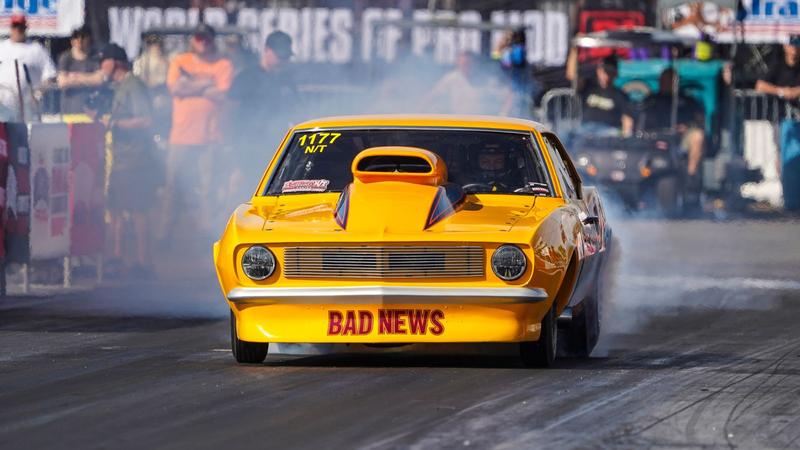
This is especially important in drag racing and track launches, where the first few seconds determine the outcome.
Traction depends on:
- Tire compound
- Tire width
- Suspension setup
- Weight distribution
- Surface conditions
- Driver technique
You can add hundreds of horsepower to a car, but without proper traction, the improvement may be minimal. In many cases, upgrading tires and suspension produces faster times than adding engine power.
Why Two Cars With the Same Horsepower Can Run Different Times
This is one of the most common questions in performance tuning.
Consider two cars:
Car A
- 500 horsepower
- 3,900 pounds
- Street tires
- Stock suspension
Car B
- 500 horsepower
- 3,400 pounds
- Performance tires
- Upgraded suspension
Even with identical horsepower, Car B will almost always be faster. It launches harder, maintains traction, and carries less weight. The result is quicker acceleration and shorter lap times.
Performance is the sum of multiple variables working together.
The Performance Equation Most People Miss
There is a simple way to think about performance:
Power moves the car.
Weight slows it down.
Traction determines how much power you can use.
Ignore any one of those factors, and performance suffers.
Professional racing teams spend enormous amounts of time balancing these three elements because small improvements in each area produce significant gains overall.
That same principle applies to everyday builds.
Where to Spend Your Money First
For most enthusiasts, the smartest upgrades follow a predictable order.
- Tires
- Suspension
- Weight reduction
- Power upgrades
This sequence produces the best performance gains per dollar. It also improves safety and consistency before increasing engine output.
Jumping straight to horsepower upgrades without addressing traction and handling often leads to frustration, not speed.
The Role of Driver Skill
There is one more factor that cannot be ignored: the driver.
Even the most powerful car cannot reach its potential without proper technique. Launch timing, throttle control, braking points, and steering inputs all influence performance.
That is why experienced drivers often produce faster lap times in slower cars than inexperienced drivers in faster ones.
Skill turns potential into results.
Final Thoughts
Horsepower grabs attention.
Weight shapes performance.
Traction wins races.
The fastest cars are not the ones with the biggest numbers on paper. They are the ones that balance power, control, and efficiency.
For builders and racers, understanding that balance is the difference between chasing speed and actually achieving it.
Because in the end, performance is not about how much power you have.
It is about how well you use it.